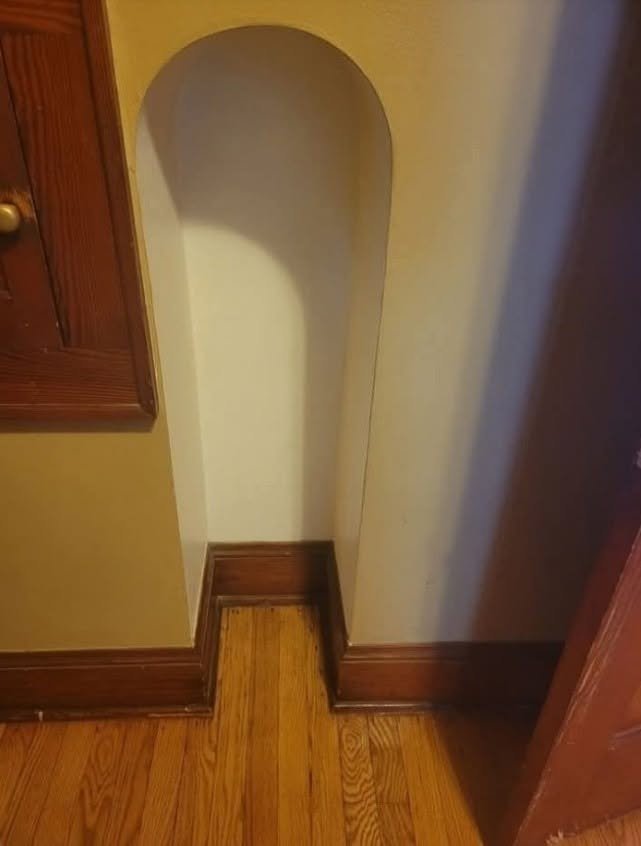
Have you ever walked through an older home and noticed a small recessed opening built directly into the wall? At first glance, it might seem like an odd design choice, a forgotten storage space, or even a construction mistake. However, these narrow wall niches often have a fascinating history and were created with a very practical purpose in mind.
Many people who discover one of these openings are left wondering why it exists. Surprisingly, these small architectural details tell an interesting story about how homes were designed before modern heating systems, built-in closets, and advanced insulation became common. In many historic houses across Europe and North America, every inch of space had a purpose, and these niches were no exception.
What Is a Wall Niche?
A wall niche is a recessed section built directly into a wall. Unlike shelves that protrude into a room, niches are carved into the wall itself, saving valuable floor space while providing a convenient storage area.
Architects have used wall niches for centuries in homes, churches, castles, and public buildings. Their purpose varied depending on the region, the time period, and the lifestyle of the people who lived there.
Today, homeowners often mistake these features for decorative elements, but many originally served highly practical functions.
Why Were These Small Niches Built?
One of the most common reasons was efficient use of space. Older homes often had thick masonry walls that allowed builders to create small recesses without reducing the usable living area.
These niches could be used to store everyday items such as:
* Candles
* Oil lamps
* Books
* Kitchen utensils
* Decorative objects
* Religious statues
* Small household tools
Instead of adding bulky furniture, homeowners could simply use the wall itself as storage.
A Place for Heating Equipment
In some older homes, especially those built before central heating became common, narrow wall recesses were designed to accommodate heating pipes, radiators, or small stoves. Keeping these elements partially inside the wall helped save space while protecting them from accidental damage.
Some historians also note that similar recesses were occasionally used to improve air circulation around heating systems.
Next Page…
For Complete Cooking STEPS Please Head On Over To Next Page Or Open button (>)